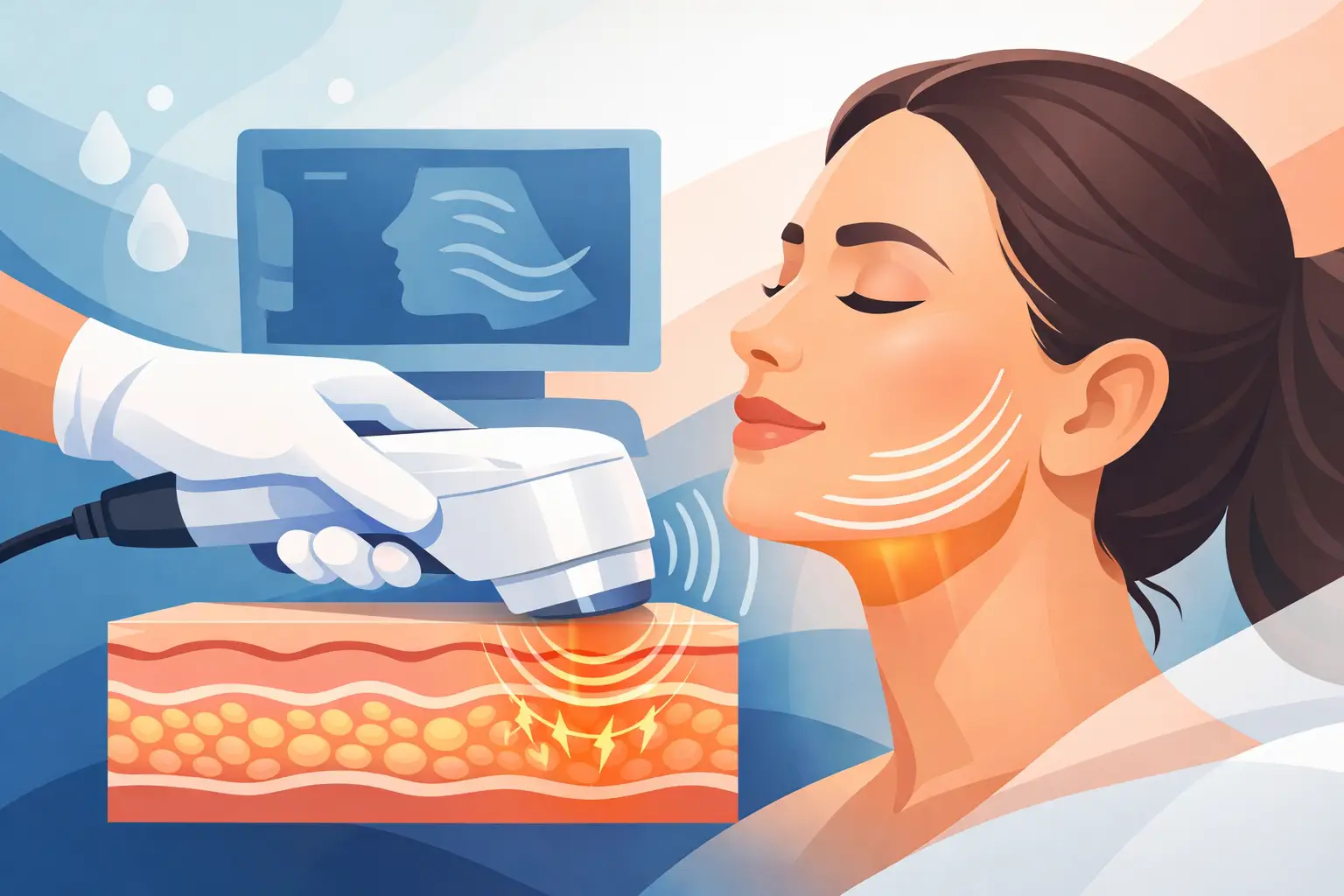
A softer jawline in photos, skin that no longer feels as springy along the cheeks, or a neck that seems to have changed before you were ready can be surprisingly personal concerns. An ultrasound skin tightening treatment is designed for people who want to support firmer, more lifted-looking skin without surgery, incisions, or a lengthy recovery period.
Rather than changing the character of your face, this non-surgical approach works with your skin’s natural collagen response. The goal is refinement: a refreshed, more defined appearance that still looks like you.
How an Ultrasound Skin Tightening Treatment Works
Ultrasound technology sends focused sound-wave energy beneath the skin’s surface to carefully selected layers of tissue. This energy creates controlled warmth at precise depths, encouraging the body to begin its natural repair process and produce new collagen.
Collagen is one of the structural proteins that helps skin appear firm, smooth, and resilient. As we age, collagen production naturally slows. Sun exposure, stress, weight fluctuations, and genetics can also influence how quickly we notice laxity in the face, neck, and other areas.
An ultrasound treatment does not rely on needles, fillers, or surgical removal of skin. Instead, it supports gradual renewal from within. That gradual process is one reason the results can look so natural. You are not trying to become someone else. You are giving your skin a meaningful opportunity to regain support over time.
Areas That May Benefit From Ultrasound Tightening
Ultrasound skin tightening is often chosen for the lower face and neck, where early laxity can soften facial contours. Depending on the technology, your skin quality, and your personalized plan, treatment may also be considered for areas such as the brow, cheeks, under-chin area, or décolletage.
The best treatment area is not always the one you first notice in the mirror. For example, someone concerned about a less-defined jawline may benefit from an assessment of the cheeks, chin, neck, and overall facial balance. Treating one area thoughtfully can complement the appearance of another.
At Kadmiel Advanced Integrative Aesthetics, individualized planning begins with listening. Your goals, anatomy, skin condition, lifestyle, and comfort level all matter when determining whether ultrasound is the right option and where it may provide the most refined result.
What Results Can You Realistically Expect?
The most rewarding results tend to be subtle but visible: skin may look firmer, contours may appear more defined, and the face or neck may have a more rested appearance. Because collagen remodeling takes time, changes develop gradually rather than appearing overnight.
Some clients notice an early sense of tightness after their appointment, but the more meaningful improvement generally unfolds over the following weeks and months as new collagen develops. Your timeline depends on factors such as your age, baseline skin laxity, sun exposure, nutrition, and the consistency of your skincare habits.
It is also helpful to be clear about the trade-off. Ultrasound can improve mild to moderate laxity and support a naturally refreshed look, but it cannot duplicate the dramatic change of a surgical facelift for someone with significant loose skin. If a provider promises to erase every sign of aging in one appointment, that is a reason to pause. Thoughtful aesthetic care should set honest expectations while still honoring what you hope to achieve.
Is This Treatment Right for You?
A good candidate is often someone who has begun noticing mild to moderate skin laxity and wants a non-invasive option with little interruption to daily life. Many people choose ultrasound because they want to maintain their appearance proactively, while others seek it when a specific concern, such as a softening jawline or loose neck skin, starts affecting their confidence.
A consultation is essential because not every concern is caused by skin laxity alone. Volume loss can make the face look less lifted. Uneven pigmentation, dehydration, texture changes, or weakened facial contours may also contribute to an appearance that feels less vibrant. In some cases, ultrasound is an excellent standalone service. In others, a customized plan may combine it with skin rejuvenation, professional skincare, or another non-surgical treatment to address the full picture.
Ultrasound treatment may not be appropriate for everyone. Your provider should review your health history, current skin condition, prior cosmetic procedures, and any implanted electronic devices or metal in the treatment area. Pregnancy, active skin irritation or infection, and certain medical circumstances may require postponing treatment or choosing a different approach. Open communication helps protect both your safety and your results.
What Happens During Your Appointment?
Your visit begins with a review of the treatment plan and the areas being addressed. After the skin is cleansed, a conductive gel is applied. The provider then moves the ultrasound handpiece across the planned treatment area, delivering energy in measured passes.
Sensations vary. Many clients describe brief warmth, tingling, or small pulses beneath the skin. Some areas, especially near the jawline or bony contours, can feel more intense than others. Your comfort matters, so speak up during the appointment. A skilled provider can adjust the approach while maintaining a treatment plan that is appropriate for your goals.
The length of the session depends on the areas treated. Because there are no incisions and typically no need for significant recovery time, many people return to their usual routine after their visit.
Recovery and Aftercare: Keep It Simple
Most clients experience little to no downtime. Mild redness, tenderness, swelling, or temporary sensitivity can occur, especially in the first hours or days after treatment. These effects are usually manageable and temporary, but every body responds differently.
Treat your skin gently afterward. Keep it hydrated, wear broad-spectrum sunscreen daily, and follow the specific aftercare guidance given during your appointment. Avoid aggressive exfoliation, intense heat, or any products your provider recommends pausing while your skin settles.
Long-term care matters, too. Ultrasound can stimulate a valuable collagen response, but it does not stop the natural aging process. Consistent sun protection, a personalized home routine, hydration, nourishing food choices, and periodic maintenance can help you protect the investment you are making in your skin.
Why Personalized Treatment Makes a Difference
The same device can produce very different experiences and outcomes depending on how it is used. Treatment depth, energy settings, placement, the condition of the skin, and your individual facial structure all influence planning. This is why a one-size-fits-all approach can fall short.
A personalized assessment helps identify whether your concern is primarily laxity, volume change, texture, pigmentation, or a combination of factors. It also creates space for a more important conversation: how you want to feel when you look in the mirror. Some clients want gentle maintenance that preserves their familiar features. Others are preparing for a milestone and want a more focused plan. Both goals deserve respectful, informed care.
Choosing non-surgical aesthetics can be an act of self-respect, not a demand for perfection. When your treatment is selected thoughtfully and your expectations are grounded, ultrasound tightening can be a beautiful way to enhance your essence, support your confidence, and care for the skin you live in every day.