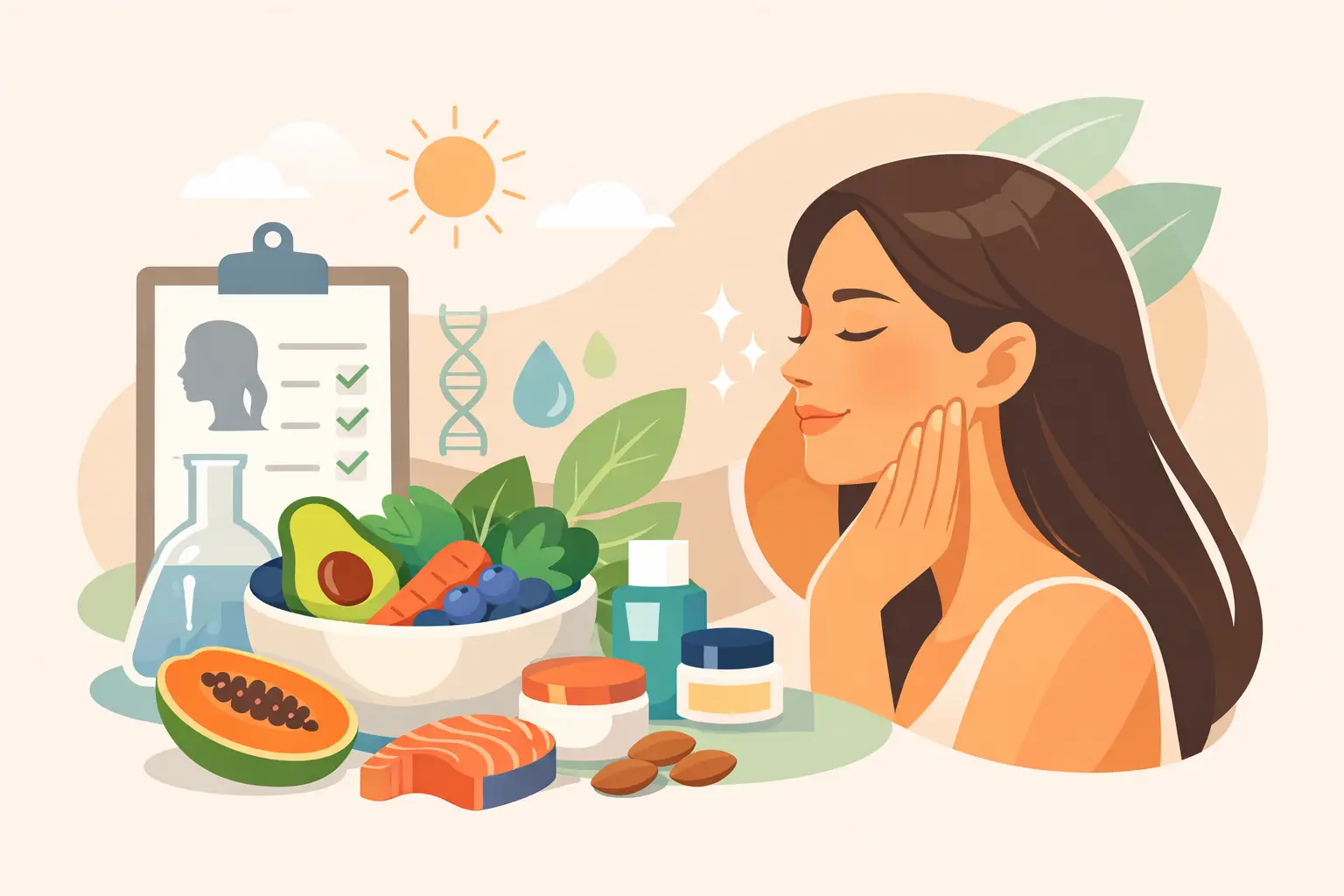
Your skin may be asking for more than another serum. When breakouts linger, melasma seems harder to manage, or your complexion looks tired despite a consistent routine, the missing piece can be what is happening beneath the surface. Nutrition coaching for skin health offers a thoughtful way to connect daily food choices, hydration, lifestyle patterns, and professional skin care into a plan that feels realistic and personal.
At Kadmiel Advanced Integrative Aesthetics, we see skin as part of your whole well-being. Advanced treatments can renew texture, target unwanted pigment, and support a clearer-looking complexion. Nutritional guidance can help you create the daily conditions that support those visible results, so your care feels intentional long after you leave the treatment room.
Why Skin Concerns Are Rarely Only Skin Deep
Skin is a living barrier that responds to many influences at once. Sleep quality, stress, digestion, hydration, blood-sugar swings, alcohol intake, hormones, medications, and the foods you eat can all affect how your skin looks and feels. That does not mean a single food causes every breakout or that a “perfect” diet can erase every concern. Acne, rosacea, melasma, eczema, and persistent irritation have different causes and may need medical evaluation or specialized treatment.
Still, patterns matter. Some people notice more congestion after weeks of highly processed snacks and sugary drinks. Others find that inconsistent meals, low water intake, or restrictive dieting leaves their skin looking dull, dry, or reactive. The goal of coaching is not to blame you for your skin or give you another rigid set of rules. It is to identify the patterns worth adjusting and build habits you can actually maintain.
A personalized approach is especially valuable because healthy eating looks different from person to person. A busy parent, a shift worker, an athlete, and someone navigating hormonal changes may have very different schedules, needs, and obstacles. Your plan should honor that reality.
What Nutrition Coaching for Skin Health Looks Like
Nutrition coaching begins with listening. Rather than handing you a generic meal plan, your provider considers your skin goals, current routines, treatment plan, food preferences, schedule, hydration habits, and relevant health history. You may discuss concerns such as recurring blemishes, excess oil, visible dryness, uneven tone, loss of radiance, or slow recovery after a flare-up.
From there, coaching focuses on practical changes that can support your skin and your energy. This might mean creating more balanced meals, planning satisfying snacks so you are not skipping meals, increasing fiber gradually, or finding easy ways to include more nutrient-rich foods during a demanding week. It can also mean taking an honest look at habits that may be working against your goals, without shame or extremes.
The most effective plan is usually built in small steps. If your current routine is coffee in the morning, a rushed lunch, and takeout late at night, expecting a complete transformation by Monday is not compassionate or sustainable. A better starting point may be adding protein and fiber to breakfast, carrying a water bottle, or preparing two convenient lunch options each week. Consistency creates momentum.
The nutrients your complexion uses every day
Skin does not need trendy “beauty foods.” It benefits from an overall eating pattern that supplies enough energy, protein, vitamins, minerals, essential fats, and fluids. Protein supports the body’s normal repair processes. Colorful fruits and vegetables provide a range of antioxidants and nutrients, while foods rich in healthy fats can support skin comfort and barrier function.
Fiber-rich foods such as vegetables, fruit, beans, and whole grains also support digestive health and steadier meals. For many people, pairing carbohydrates with protein, fat, or fiber helps reduce the sharp energy highs and lows that can lead to intense cravings later. This is not about fearing carbohydrates. It is about creating meals that keep you nourished, satisfied, and more consistent.
Hydration deserves attention, too. Drinking enough water will not instantly erase lines or replace moisturizer, but regular hydration supports normal body function and can complement a skin-care routine. Your needs vary based on activity, weather, health conditions, and medications, so coaching helps you find a practical rhythm rather than chase a universal number.
When Food Changes May Help – and When They May Not
There is a great deal of skin advice online, much of it overly certain. One post says dairy is the cause of acne. Another says gluten is the problem. A third promises that eliminating sugar will clear every blemish. The truth is more nuanced.
Some individuals do notice a relationship between certain foods and their skin. Others do not. Broad elimination diets can create stress around eating, reduce important nutrients, and make social life unnecessarily difficult. Before removing major food groups, it is wise to look for a consistent pattern and discuss ongoing symptoms with an appropriate health professional.
Coaching is most helpful when it replaces guesswork with observation. You may be encouraged to notice how your skin, digestion, energy, and appetite respond over several weeks, rather than judging a food based on one meal or one breakout. Skin changes take time, and many factors can overlap, including a new product, menstrual cycle changes, travel, stress, or a treatment series.
If you have a diagnosed medical condition, food allergy, history of disordered eating, unexplained weight change, severe acne, or a painful and rapidly worsening rash, nutrition coaching should complement, not replace, medical care. A responsible plan respects those boundaries.
Pairing Nutrition With Professional Skin Treatments
Food supports the foundation, while targeted aesthetic treatments can address concerns at the skin level. This combination can be especially meaningful for clients seeking a more complete approach to acne, clogged pores, uneven tone, dryness, or signs of aging.
For example, hydrodermabrasion or a Korean deep-cleansing facial may help refresh congested, dull-looking skin, while a consistent nutrition and hydration routine supports the everyday habits behind a healthy-looking complexion. IPL skin rejuvenation and personalized protocols for pigment concerns can be paired with sun protection, balanced meals, and lifestyle guidance that supports your broader goals.
The trade-off is patience. No facial, supplement, or meal plan can guarantee a flawless complexion. Lasting improvements usually come from a customized treatment schedule, effective home care, appropriate sun protection, and habits that feel manageable enough to repeat. That is a far more empowering path than chasing quick fixes.
Supplements are not a shortcut
Supplements may have a place for some people, especially when a clinician identifies a deficiency or a specific need. But they are not automatically harmless, and more is not always better. High-dose products can interact with medications, cause side effects, or create false confidence while the basics are being overlooked.
A food-first approach keeps the focus where it belongs: nourishing meals, adequate hydration, sleep, stress support, and a skin-care plan designed for your concerns. If you are considering supplements, bring the full list of what you take to your medical provider or registered dietitian for personalized guidance.
Building Skin-Supportive Habits for Real Life
A refined wellness plan should fit your life, not take it over. Think about the moments where your routine tends to unravel: the afternoon energy crash, the drive home when you are too hungry to think, the weekend without a grocery plan, or the stressful week when water and sleep fall away. Those are the moments coaching can help you redesign.
Start with one or two changes you feel confident repeating. You might add a produce item to lunch, keep a satisfying snack in your bag, prepare a simple protein option ahead of time, or set a reminder to refill your water. Once those actions feel natural, you can build from there. Small habits may not be dramatic, but they are powerful because they continue.
Your skin deserves care that is informed, compassionate, and free from punishment. Let your daily choices become another way to respect your body, support your treatment goals, and feel good both inside and out.