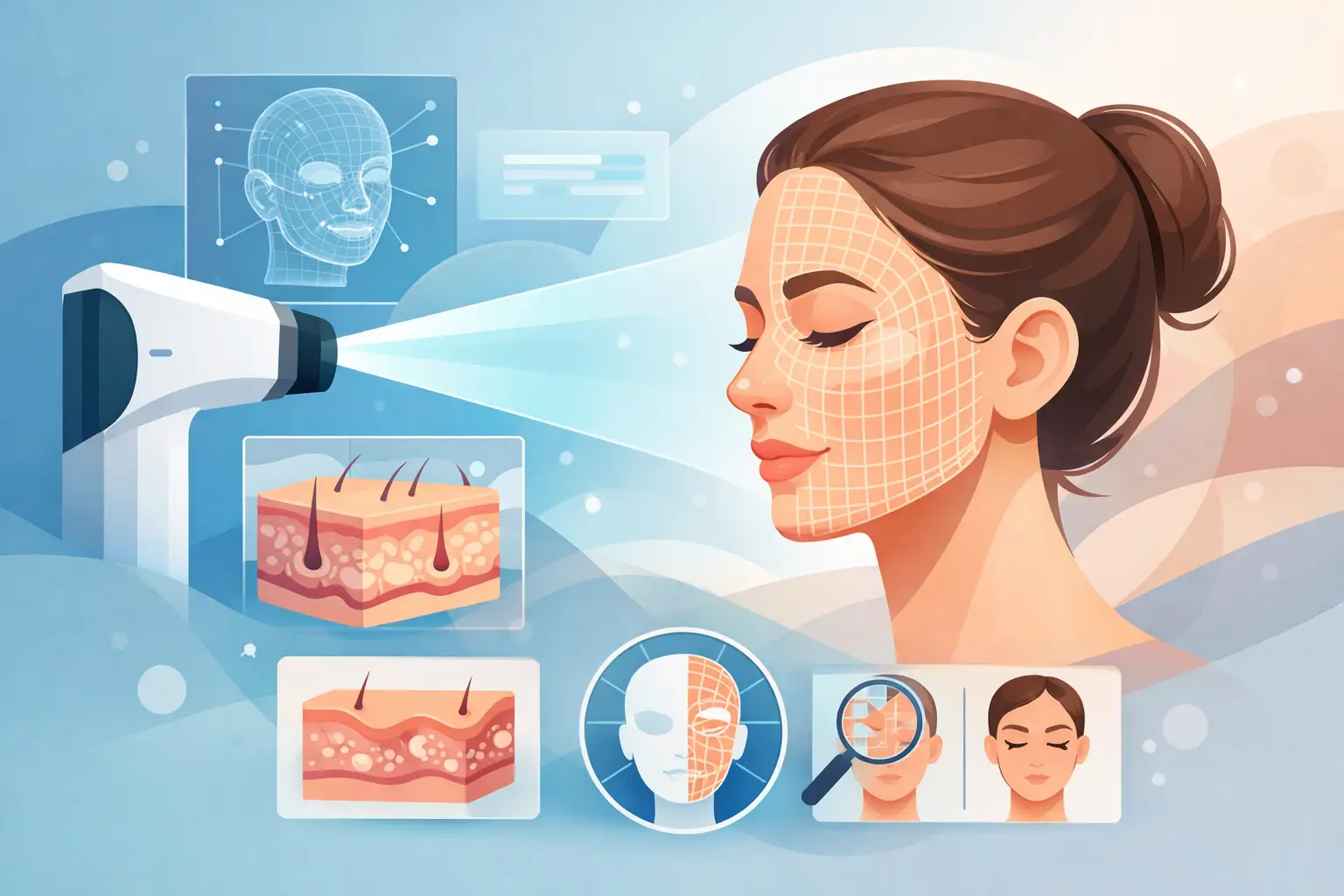
A mirror can show that your skin looks tired, uneven, or different than it did a few years ago. It cannot always show why. What is 3D skin analysis? It is an advanced facial imaging assessment that creates a detailed visual map of your skin, helping your provider look beyond the surface and build a plan around what your complexion truly needs.
For clients who want natural-looking improvement rather than a one-size-fits-all facial, this level of insight can be a meaningful starting point. It brings more clarity to concerns such as pigmentation, texture, visible pores, fine lines, redness, acne, and facial volume changes, so every next step has a purpose.
What Is 3D Skin Analysis?
3D skin analysis uses specialized imaging technology to capture multiple high-resolution views of the face. Rather than relying on a single photo or a quick visual assessment, the system examines the skin from different angles and often under different lighting conditions. It may identify concerns that are easy to miss in everyday light, including early sun damage, uneven pigment below the surface, changes in texture, and variations in facial contours.
The result is not a diagnosis, and it does not replace care from a dermatologist when a medical skin concern is present. Instead, it is a detailed aesthetic assessment. It gives your provider a clearer foundation for recommending professional treatments, at-home skincare, and realistic maintenance steps that support your goals.
At Kadmiel Advanced Integrative Aesthetics, this assessment reflects a simple belief: your skin deserves to be understood before it is treated. Your plan should honor your unique features, lifestyle, comfort level, and desired outcome.
How 3D Facial Imaging Looks Beneath the Surface
Healthy-looking skin is shaped by more than what is visible at first glance. A small cluster of dark spots may be related to sun exposure, post-acne marks, melasma, or a combination of factors. What appears to be dryness may also involve buildup, an impaired skin barrier, or a skincare routine that is not suited to your skin.
3D facial imaging helps organize these details. Depending on the technology used, it can measure or visualize concerns such as wrinkles, pore visibility, texture irregularities, brown spots, redness, UV-related damage, acne-related changes, and facial symmetry or contour. Some systems create a three-dimensional representation of the face, which can help show where volume, firmness, or surface quality differs from one area to another.
This matters because two people can share the same concern while needing very different care. For example, both may want a brighter complexion. One may benefit from a series focused on gentle exfoliation and hydration, while another may need a more pigment-focused approach combined with consistent sun protection. The image is useful, but the thoughtful interpretation behind it is what makes it personal.
A Baseline You Can Return To
One of the most valuable parts of 3D skin analysis is having a baseline. Your initial images document where your skin is at the beginning of your journey. Future assessments can help you and your provider notice progress that may be subtle from day to day, such as improved clarity, smoother texture, or a more even appearance.
Skin changes gradually, and lighting, makeup, sleep, and stress can all influence how it looks on any given morning. Standardized imaging creates a more consistent point of comparison. It can make the conversation less about chasing perfection and more about observing meaningful, healthy-looking improvement over time.
What Happens During a 3D Skin Analysis Appointment?
The experience is typically comfortable, noninvasive, and brief. Your provider will begin by listening. You may discuss your current skincare routine, previous treatments, sensitivities, lifestyle, and the changes you would most like to see. This conversation is just as important as the imaging itself, because technology should support your goals, not speak over them.
Before the images are taken, you may be asked to remove makeup or keep the skin clean and free of reflective products. The imaging device captures facial photographs from several positions. There are no needles, no recovery period, and no treatment performed during the scan unless you and your provider choose to move forward with a service afterward.
Once the images are ready, your provider reviews them with you in clear, approachable language. You should feel comfortable asking questions such as: What concern should I address first? Which changes are realistic? How many treatments might I need? What can I do at home to protect my results?
A quality consultation should never make you feel pressured to correct every visible detail. The purpose is to give you options and help you choose the care that feels right for you.
How Your Results Can Shape a Personalized Skin Plan
A 3D assessment can guide treatment decisions, but it is not a treatment plan by itself. Your provider should consider your skin type, tone, sensitivity, history of pigmentation, active breakouts, schedule, budget, and tolerance for downtime before making recommendations.
For someone with congested pores and dull texture, hydrodermabrasion or a deep-cleansing facial may be an appropriate first step. For visible sun spots, redness, or uneven tone, IPL skin rejuvenation may be discussed if it is suitable for the individual’s skin and goals. Clients concerned with dehydrated, lackluster skin may benefit from oxygen facial support and a simplified home routine. Acne and melasma often require a careful, consistent protocol because aggressive treatment can sometimes aggravate inflammation or pigment.
The right plan may also include what not to do. Using too many active products, switching routines every week, or treating irritated skin too aggressively can interfere with progress. Advanced imaging can reveal areas of concern, but lasting results still rely on thoughtful treatment pacing, daily SPF, appropriate home care, and patience.
When 3D Analysis Is Especially Helpful
3D skin analysis is particularly useful when you are unsure where to begin, have tried multiple products without seeing the changes you hoped for, or want to track progress through a treatment series. It can also be helpful before a special event, as long as there is enough time to plan treatments carefully rather than rushing the process.
It is equally valuable for preventive care. Fine lines, uneven tone, and UV damage can develop gradually. Seeing an early pattern can encourage smarter habits now, including consistent sunscreen use and a skincare routine that supports the skin barrier.
That said, imaging is not necessary for every appointment. If you are booking a straightforward maintenance facial and already have a well-established plan, a full analysis may not be needed each time. The value depends on your goals and whether new information would change the care you receive.
What 3D Skin Analysis Cannot Tell You
Advanced technology can provide impressive detail, but it has limits. It cannot guarantee a particular outcome, predict exactly how your skin will respond, or replace a medical examination. Results can also be influenced by recent sun exposure, active inflammation, makeup residue, skincare products, and natural day-to-day shifts in hydration.
If you have a changing mole, a persistent rash, painful cystic acne, unexplained discoloration, or any concern about skin health, seek evaluation from a qualified medical professional. Aesthetic imaging is best used as part of responsible, informed care.
It is also worth remembering that a scan may reveal normal features of real human skin. Pores, expression lines, slight asymmetry, and texture are not failures. The goal is not to erase your character. It is to support clearer, smoother, more refreshed-looking skin in a way that still looks like you.
Preparing for a More Useful Assessment
Arrive with clean skin when possible, and avoid trying a brand-new active product immediately before your appointment. Be open about recent treatments, medications, sensitivity, pregnancy status, and your home routine. These details help your provider recommend care that is safe and appropriate.
Bring your real goals, too. Perhaps you want to feel more confident without makeup, reduce the appearance of post-acne marks, or maintain a refreshed look without surgery. There is no need to have the technical language figured out. A good consultation turns what you see in the mirror into a practical path forward.
Your skin tells a story shaped by time, health, habits, and care. A 3D analysis gives that story more definition, while a personalized approach helps you decide what chapter you want to write next.