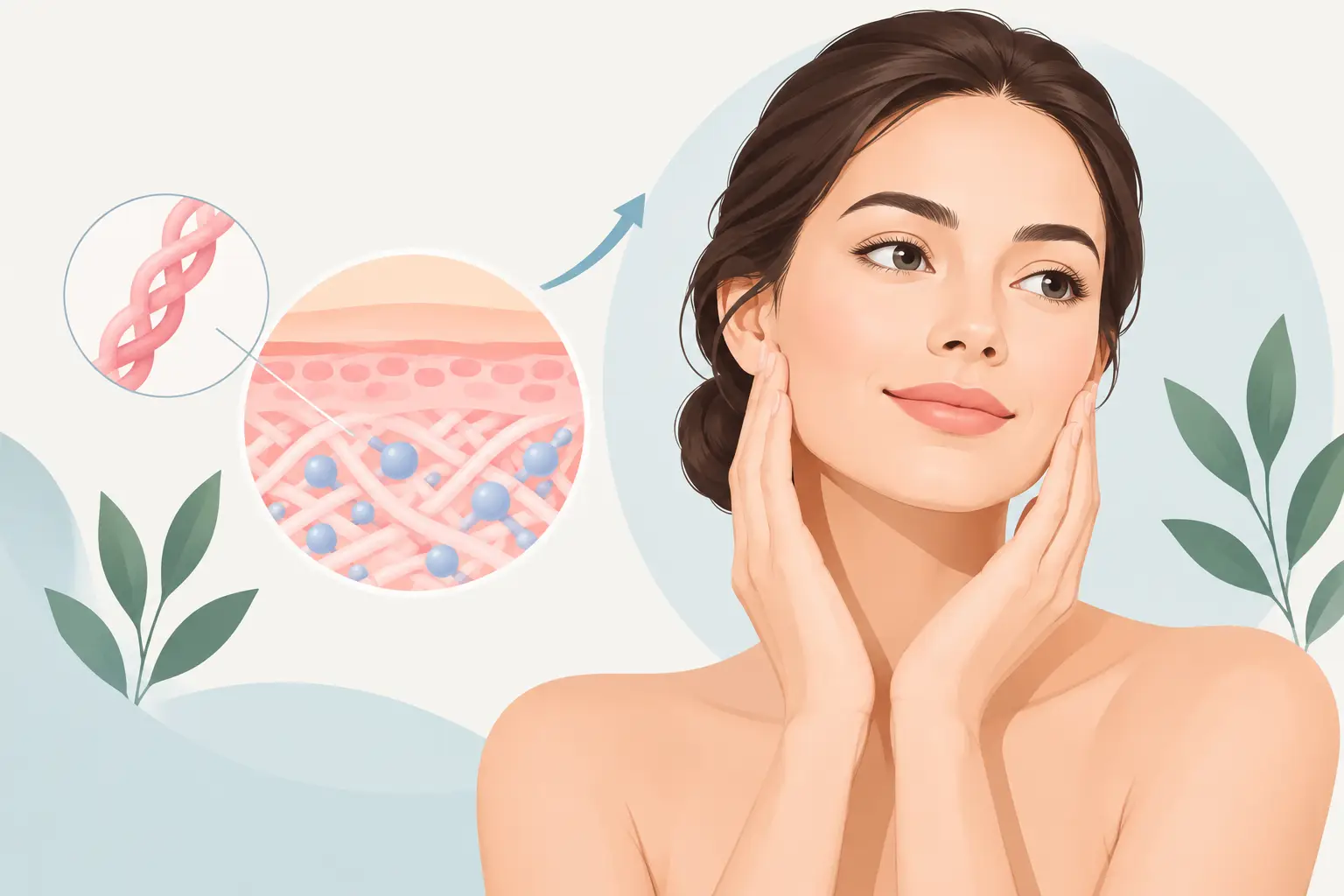
The mirror rarely changes overnight. More often, you notice that your cheeks seem less lifted in certain lighting, fine lines linger after a good night’s sleep, or your skin no longer has the same spring it once did. This guide to facial collagen stimulation explains what may be happening beneath the surface and how thoughtful, non-surgical care can help you support a firmer, smoother, naturally refreshed appearance.
Collagen stimulation is not about changing your face or chasing an overly tight look. It is about supporting the skin structures that help your features look rested, defined, and true to you. At Kadmiel Advanced Integrative Aesthetics, every treatment plan begins with listening to your goals, evaluating your skin, and choosing care that respects your unique essence.
What Facial Collagen Does for Your Skin
Collagen is a protein that gives skin much of its structure, strength, and resilience. Along with elastin and hydrating components within the skin, it helps create the soft, supported appearance associated with healthy, youthful-looking skin.
Beginning in adulthood, natural collagen production gradually slows. Sun exposure, stress, smoking, dehydration, hormonal changes, genetics, and repeated facial movement can all influence how quickly this change becomes visible. Skin may begin to look thinner, less firm, or less even in texture. You might notice fine lines around the eyes and mouth, a softer jawline, or mild laxity through the cheeks and neck.
No professional treatment can stop the aging process, and meaningful skin change takes time. However, treatments that encourage the skin’s natural renewal response can help improve the look of firmness, texture, and tone over a series of sessions. The goal is refinement, not reinvention.
A Guide to Facial Collagen Stimulation Treatments
Facial collagen stimulation can involve several approaches, and the right one depends on what you see in the mirror, what is happening in your skin, and how much downtime fits your life. A consultation is especially valuable because concerns that look similar can have different causes. What appears to be sagging, for example, may also involve dehydration, volume changes, sun damage, or uneven pigmentation.
Ultrasound-based skin tightening
Ultrasound technology is designed to deliver focused energy below the visible surface of the skin. This controlled energy gently warms targeted layers, supporting the body’s natural collagen-building process over time. It is often chosen by clients who want a non-surgical option for mild to moderate facial laxity, particularly around the cheeks, jawline, chin, or neck.
Results develop gradually rather than appearing immediately. Some clients notice an early feeling of tightness, while collagen remodeling and visible refinement may continue for several weeks to months. This makes ultrasound-based treatment a good fit for people who prefer subtle, natural-looking progress with little interruption to their regular routine.
The trade-off is patience. If you are seeking a dramatic overnight change, non-surgical collagen stimulation may not meet that expectation. But for someone who wants to enhance definition while still looking like themselves, a personalized series can be a beautiful choice.
IPL for tone, texture, and overall skin quality
Intense pulsed light, commonly called IPL, is often associated with the appearance of sun spots, redness, and uneven tone. It can also complement a collagen-focused plan by supporting healthier-looking skin texture and overall renewal.
When the complexion is clearer and more even, facial contours often look more refreshed as well. IPL may be helpful for concerns such as visible sun damage, discoloration, redness, and dullness that can make the skin appear older than it feels. It is not a substitute for a deeper skin-tightening approach when laxity is the primary concern, but it can be an excellent partner treatment when both tone and texture need attention.
Not every skin tone or pigment concern is suited to the same light-based approach. Melasma, for instance, requires a particularly careful plan because aggressive or poorly matched treatments may trigger more pigmentation. A professional assessment helps determine whether IPL, a customized facial protocol, or another strategy is most appropriate.
Deep cleansing and hydration support
Hydrodermabrasion, oxygen facials, and Korean deep-cleansing facials do not create the same deeper collagen response as energy-based treatments. Their value is different and still meaningful. They can remove buildup, hydrate the skin, support smoother texture, and create the healthy surface condition that helps your skin look its best.
Think of these treatments as supportive care within a larger rejuvenation plan. When skin is congested, dehydrated, or covered with dull surface cells, even a strong collagen-stimulation protocol may not look as radiant as it could. Regular professional facials can help maintain clarity and glow between more targeted treatments.
What Results Can You Realistically Expect?
The most satisfying results are usually gradual. Rather than seeing a completely different face, you may notice that your skin looks smoother in photographs, your jawline appears more defined, or your makeup applies more evenly. People around you may say you look rested without being able to identify exactly why.
Your starting point matters. Younger clients may pursue collagen stimulation as preventive care when early fine lines or mild laxity begin to appear. Clients with more advanced skin laxity may still see improvement, but may need a more comprehensive treatment series and realistic expectations about what non-surgical care can achieve.
A customized plan may also combine collagen-focused treatments with solutions for acne, pigmentation, clogged pores, or dehydration. Skin does not age in isolated categories, so treatment should not be one-size-fits-all. The most refined results often come from addressing several skin needs in the right order.
How to Support Collagen Between Appointments
Professional treatments work best when your everyday habits protect the progress you are making. Consistent sunscreen use is one of the most valuable ways to preserve collagen, since ultraviolet exposure contributes to premature skin aging. A broad-spectrum SPF should be part of your daily routine, even on cloudy Pacific Northwest days.
Your home care also matters. Gentle cleansing, adequate hydration, and personalized skincare can help maintain the skin barrier and improve how your complexion responds to professional care. Retinoids, antioxidants, and peptide-based products may be appropriate for some clients, but the right formula and frequency depend on skin sensitivity, acne activity, pigmentation concerns, and current treatments.
Nutrition, sleep, stress management, and avoiding smoking also influence skin health. These habits are not quick fixes, but they support the same long-term goal: helping your body care for the skin you live in every day.
Choosing a Personalized Facial Rejuvenation Plan
A thoughtful consultation should feel clear, private, and pressure-free. You deserve to understand what a treatment is designed to do, what it cannot do, when you may see change, and how many sessions may be recommended. It is also wise to share any history of melasma, active acne, cold sores, recent cosmetic procedures, pregnancy, medical conditions, or medications that could affect treatment planning.
At Kadmiel Advanced Integrative Aesthetics, facial care is approached as a personal transformation journey, not a rushed appointment. Advanced technology matters, but so does the professional judgment behind it. Your protocol should account for your facial structure, skin condition, lifestyle, comfort level, and vision for your results.
If you are ready to care for skin that feels less firm, dull, or uneven, begin with an assessment rather than a guess. The right plan can help you move forward with confidence, honoring your features while giving your skin the support it deserves.