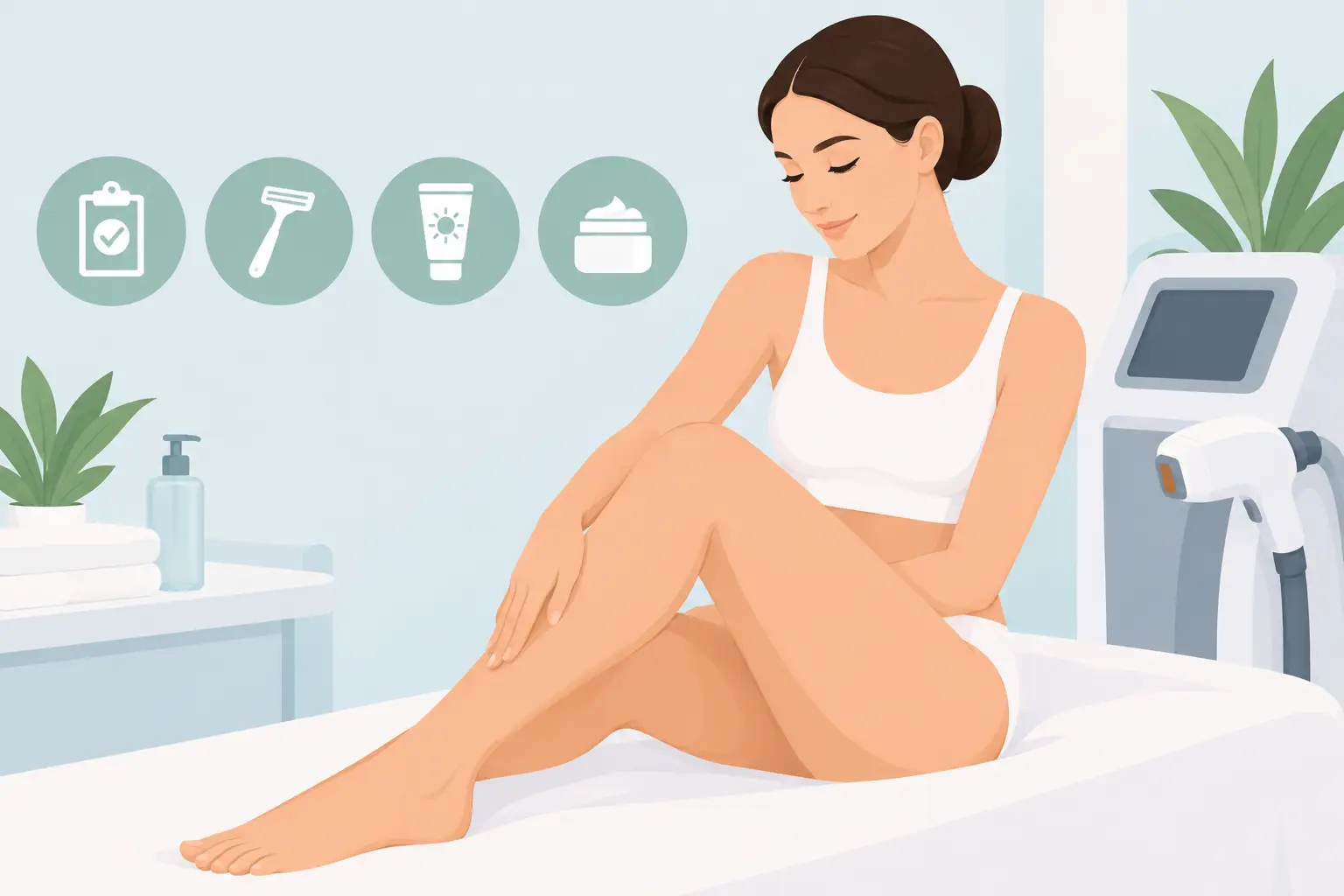
Smooth, long-lasting hair reduction begins before your first pulse of light. When you prepare for laser hair removal thoughtfully, you give your provider the clearest possible path to treat the hair follicle while protecting the skin around it. A few small adjustments to your grooming and skin-care routine can make your appointment more comfortable, more effective, and better aligned with your natural skin tone and goals.
Laser hair removal is never a one-size-fits-all service. Your hair color, hair density, treatment area, skin sensitivity, recent sun exposure, and health history all shape the right treatment plan. At Kadmiel Advanced Integrative Aesthetics, preparation starts with listening: understanding what you would like to change, how your skin responds, and what results will help you feel most confident in your everyday life.
Why Preparation Matters Before Laser Hair Removal
Laser hair removal works by directing light energy toward pigment in the hair. That energy travels down the hair shaft to target the follicle, helping reduce future growth over a series of treatments. For the treatment to work well, there needs to be hair within the follicle – but the skin should be calm, clean, and free of excess pigment from a recent tan or self-tanner.
Preparation helps your provider select settings that respect your skin and target hair effectively. It can also reduce the chance of avoidable irritation. This is especially relevant for delicate areas such as the bikini line, underarms, face, and Brazilian area, where skin may be more reactive after shaving, exfoliating, or using active skin-care products.
The goal is not perfection. It is arriving with honest information about your skin and a simple routine that supports a safe, customized session.
How to Prepare for Laser Hair Removal in the Weeks Before
Pause waxing, plucking, threading, and epilating
Stop any hair-removal method that pulls hair from the root before beginning your laser series. Waxing, sugaring, threading, tweezing, and epilators remove the hair the laser needs to identify and treat beneath the skin.
In many cases, clients are asked to pause these methods for four to six weeks before treatment, though your provider may adjust that timing by area and hair-growth pattern. Shaving is different: it trims hair at the surface while leaving the follicle in place. If you need to manage growth between appointments, shaving is usually the preferred option.
Protect the treatment area from sun exposure
Tanned or sunburned skin has more surface pigment, which can make treatment less predictable and increase sensitivity. Avoid intentional tanning, tanning beds, and prolonged unprotected sun exposure before your appointment. Self-tanning products can also interfere with an accurate assessment of your natural skin tone.
The exact timing depends on your skin, the area being treated, and your provider’s protocol. As a practical rule, keep the area protected with clothing and broad-spectrum sunscreen when it is exposed outdoors. If you have recently been in strong sun, developed a tan, or experienced any redness or peeling, let your provider know before your visit. Rescheduling may be the safest choice, not a setback.
Review your medications and skin-care products
Some prescription medications, supplements, and topical products can increase light sensitivity or make skin more prone to irritation. Retinoids, exfoliating acids, certain acne treatments, and some antibiotics are common examples that deserve a conversation.
Do not stop a prescribed medication on your own. Instead, share a complete and current list during your consultation, including topical products, oral medications, supplements, and any recent changes. Your provider can advise whether you need to pause a specific product, request clearance from your prescribing clinician, or delay treatment until your skin is ready.
It is also wise to mention a history of cold sores if you are treating the upper lip or another facial area, as well as any history of keloid scarring, pigmentation changes, eczema, psoriasis, or active skin infection in the treatment area. These details help create a plan that honors both your results and your comfort.
The Day Before and Day of Your Appointment
Your provider will give you instructions tailored to your treatment area, but most laser hair removal appointments call for a few straightforward steps.
First, shave the area as directed, often the evening before or the morning of your appointment. The skin should feel smooth, without razor burn or cuts. Leaving long hair above the surface can make the session less comfortable because the laser energy may singe the visible hair rather than focus efficiently below the skin.
Second, arrive with clean, bare skin. Skip lotion, body oil, perfume, deodorant, makeup, and sunscreen on the area being treated unless your provider has told you otherwise. For facial treatments, come without makeup when possible. For underarms, avoid deodorant. These products can create a barrier or cause extra warmth during treatment.
Finally, choose loose, comfortable clothing. Soft fabrics are especially helpful after treating the bikini line, legs, or underarms, when skin may feel warm or lightly sensitive. If you are receiving Brazilian laser hair removal, comfort and privacy matter. Your provider should explain positioning, draping, and each step before the session begins so you can feel informed and respected.
What Not to Do Right Before Treatment
For a calm treatment experience, avoid anything that leaves the skin overheated, freshly exfoliated, or inflamed. Skip hot tubs, saunas, steam rooms, and intense workouts immediately before your appointment if they tend to make your skin flushed. Avoid scrubs, peels, and harsh exfoliation on the treatment area for the timeframe your provider recommends.
Do not schedule laser hair removal over active irritation, open skin, a fresh rash, or a sunburn. The same applies if you have a new tattoo in the area. Laser treatment should not be performed directly over tattooed skin, and your provider can help plan around it.
If you are pregnant, breastfeeding, managing a medical condition, or starting a new medication, bring it up before treatment. Policies vary by provider and treatment type, but transparent communication allows your care team to make the safest recommendation for you.
Set Expectations for Your Treatment Series
One laser appointment can begin the process, but hair grows in cycles. The laser is most effective when hairs are in an active growth phase, and not all follicles are in that phase at once. That is why a series of treatments, spaced according to the area and your individual growth pattern, is typically recommended.
You may notice treated hairs shedding over the following days or weeks. This can look like regrowth at first, but it is often part of the normal process. Resist the urge to pluck. Shaving between sessions is generally fine, while root-removal methods can interrupt the treatment plan.
Results also depend on the contrast between hair and skin pigment, hormonal influences, and the area being treated. Coarser hair in areas such as the underarms or bikini line may respond differently than finer facial hair. A careful consultation helps establish realistic expectations, select appropriate technology, and determine whether laser hair removal is the best fit for your goals.
Plan Gentle Care After Your Session
Preparation extends beyond the appointment itself. Skin may feel warm, appear mildly pink, or show slight follicular swelling shortly after treatment. These reactions are often temporary, but your provider will tell you what is normal for your skin and when to reach out.
For the first day or two, treat the area gently. Keep it cool, avoid friction and heat, use the products your provider recommends, and protect exposed skin from the sun. Hold off on exfoliation, aggressive body treatments, and fragranced products until sensitivity has settled. If anything feels unusual or more intense than expected, contact your provider rather than trying to treat it with random over-the-counter products.
The most valuable thing you can bring to laser hair removal is not a complicated routine. It is a willingness to follow a personalized plan, ask questions, and give your skin the care it deserves. When preparation feels intentional, each appointment becomes more than a grooming task – it becomes a quiet investment in feeling comfortable, polished, and fully yourself.